
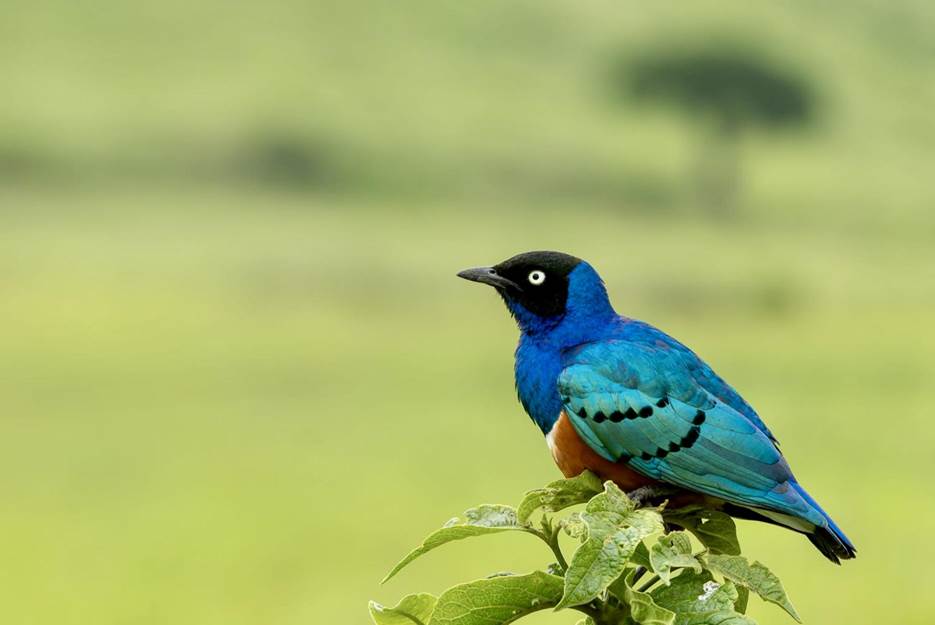
Nature’s Daily Symphony
In Uganda, mornings are not heralded by alarm clocks or espresso machines, but by a jubilant avian choir that fills the dawn with music. From the lush rainforests of Bwindi to the open savannas of Murchison Falls, birds across Uganda engage in a ritual performance every sunrise, a melodious tradition known as the dawn chorus. But have you ever stopped to wonder why birds burst into song precisely as the sun peeks over the horizon?
Let’s dive into the feathered science, evolutionary wisdom, and just a touch of poetic flair behind Uganda’s greatest natural concert.
1. Because It’s the Best Time to Be Heard (Literally)
At sunrise, the world is acoustically perfect for bird vocals. The air is cooler,drier, and less turbulent which means sound travels farther and clearer. With fewer background noises (no bustling tourists or buzzing insects yet), bird songs cut through the morning air like flutes in a cathedral.
This is especially important in Uganda’s dense forests like Kibale or Budongo, where thick vegetation can muffle sound during the day. A morning song is a bird’s best chance to say, “Hey! I’m here! And listen to how fabulous I am!”
2. It’s All About Territory and Romance
In the bird world, singing isn’t just for fun, it’s serious business. At dawn, male birds sing to:
● Declare their territory: “This fig tree is taken, pal. Move along.”
● Attract a mate: “Ladies, check out my vocal range. I am genetically gifted and ready to nest.”
Ugandan species like the Rwenzori batis, Green-breasted pitta, and African blue flycatcher use intricate, species-specific songs to communicate their intentions. And just like in human dating, a complex, confident morning tune may very well win the feathered equivalent of a bouquet of roses.
3. Because They’re Not Too Busy Yet
Once the sun is fully up, birds get to work: hunting insects, gathering nesting materials, avoiding predators, and occasionally arguing with monkeys. Singing takes energy and attention, so dawn when it’s still too dark to forage efficiently becomes prime time for vocal display.
It’s like stretching your vocal cords before the hustle begins imagine Luciano Pavarotti warming up before an opera, only with more feathers and fewer tuxedos.
4. To Bond and Reconnect
Some bird species, especially those that form long-term pairs (like hornbills or turacos), sing duets at sunrise. This behavior strengthens pair bonds, reinforces territory, and possibly helps coordinate their daily activities.
In Uganda’s forests, you might hear the synchronized calls of black-and-white-casqued hornbills, echoing like a married couple finishing each other’s sentences loudly.
5. Because It’s Coded in Their Feathers (and Brains)
Birdsong is driven by internal biological rhythms, specifically circadian clocks and hormonal cues. Light levels at dawn trigger certain hormones that stimulate singing behavior, especially in males during the breeding season.
In Uganda, where the equator ensures relatively consistent daylight year-round, birds have finely tuned rhythms. This consistency makes Uganda a dreamland for birders and a reliable stage for the avian dawn chorus.
6. The Ultimate Wake-Up Call (For Everyone)
Birdsong at sunrise doesn’t just benefit birds. It also alerts other creatures including humans that a new day has begun. In traditional Ugandan folklore, birds are often viewed as messengers, timekeepers, or spiritual guides. Their morning songs are considered a blessing: a daily reminder of harmony, life, and connection to nature.
And let’s face it: being woken by a chorus of sunbirds, weavers, and robin-chats is far more inspiring than your phone’s alarm tone.
Final Chirp: Uganda’s Dawn Chorus Is a Treasure
Uganda, often dubbed the “Pearl of Africa,” is a birder’s paradise with over 1,070 bird species. Its diverse habitats from Lake Victoria’s shores to the Albertine Rift’s cloud forests offer a rich variety of avian voices.
So the next time you’re in Uganda and you wake to a soundscape more complex than a jazz ensemble, take a moment to listen. The birds aren’t just singing for fun, they’re declaring love, defending turf, bonding with their partners, and reminding us that the world is, at its core, beautifully alive.
Bonus Tip for Birders:
Want to witness the magic of Uganda’s avian sunrise? Pack your binoculars and head to:
● Mabira Forest (for the early trills of forest species)
● Queen Elizabeth NP (where open savanna birds begin their opera)
● Bwindi Impenetrable Forest (a true hotspot for rare vocalists)
Don’t hit snooze, Uganda’s birds don’t wait. Now you know: Birds in Uganda sing at sunrise because science, romance, survival, and a bit of showmanship all demand it. And honestly, who could resist singing in such a stunning place?