
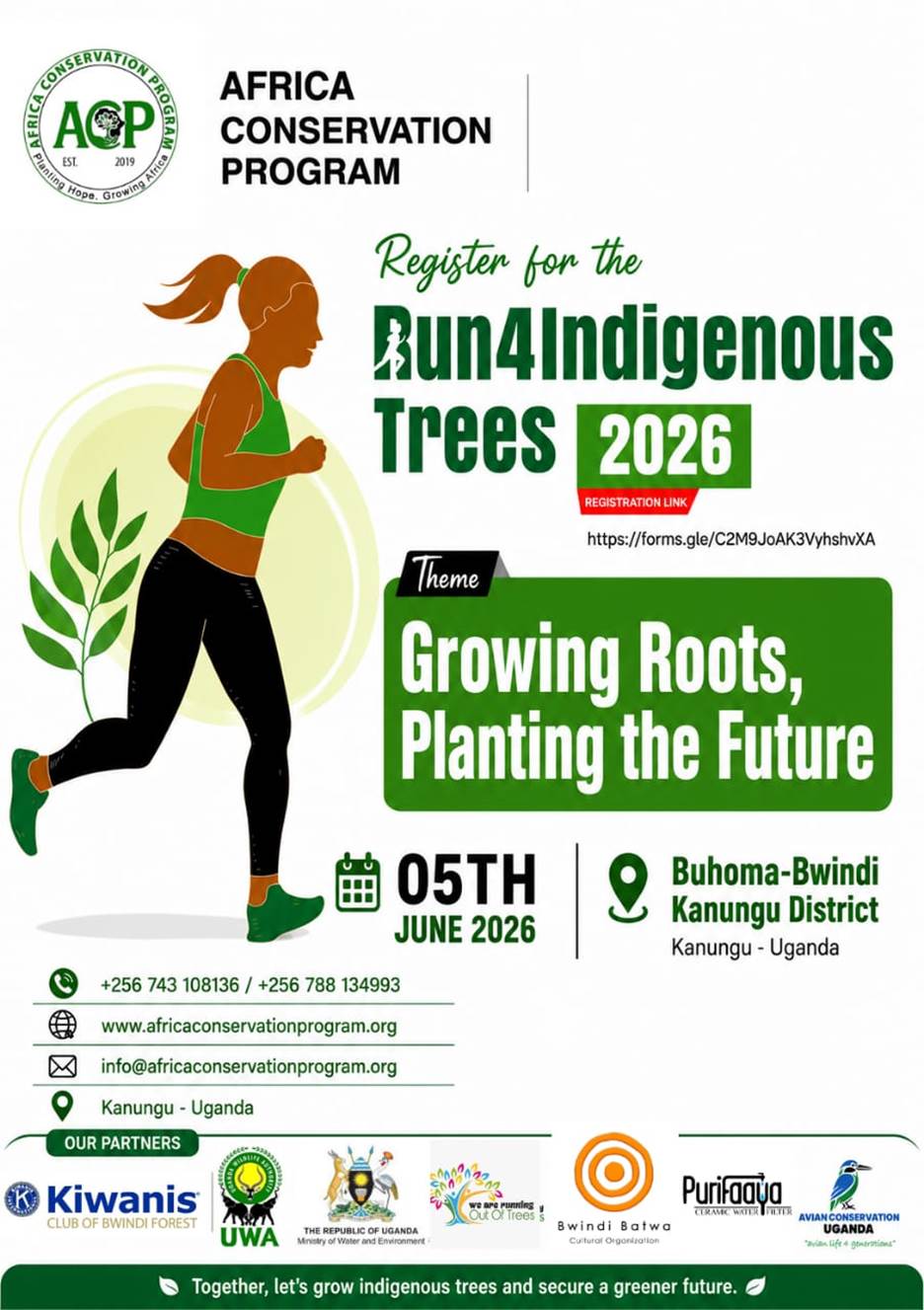
As the world prepares to mark World Environment Day on 5th June, a powerful conservation partnership is taking shape in Uganda. Avian Conservation Uganda is partnering with African Conservation Program and other environmental stakeholders to organize a “Run for Indigenous Trees,” a conservation initiative aimed at restoring natural habitats, protecting bird species, and promoting environmental sustainability across Uganda.
The event comes at a time when Uganda and the wider African continent continue to face increasing pressure from deforestation, wetland degradation, climate change, and habitat loss. Indigenous trees, which have supported Africa’s biodiversity for centuries, are disappearing at an alarming rate due to urban expansion, charcoal burning, agriculture, and unsustainable land use practices. The consequences are already visible in declining bird populations, shrinking forests, and unstable ecosystems.
This partnership represents more than just a sporting event. It is a united conservation movement bringing together bird lovers, environmentalists, youth groups, conservation organizations, tourism stakeholders, schools, and local communities under one common goal restoring indigenous tree cover to safeguard Uganda’s future biodiversity.
Why Indigenous Trees Matter for Bird Conservation
Uganda is one of Africa’s richest birding destinations, hosting more than 1,090 bird species, including the famous Grey Crowned Crane, shoebills, turacos, hornbills, sunbirds, and numerous migratory birds that travel between Africa and Europe. Healthy forests and wetlands are essential for these species to survive.
Indigenous trees provide:
- Natural nesting grounds for birds
- Feeding habitats through fruits, flowers, and insects
- Protection from predators and harsh weather
- Safe migratory stopover points
- Ecological balance for wetlands and forests
Unlike exotic tree species, indigenous trees support native insects, pollinators, mammals, reptiles, and birdlife that have evolved together for generations. Their restoration is therefore directly linked to the survival of Uganda’s avian diversity.
Conservation experts continue to emphasize that habitat destruction remains one of the biggest threats to bird populations globally. International efforts such as the African-Eurasian Waterbird Agreement (AEWA) also highlight the importance of habitat conservation for migratory bird species across Africa and Europe.
The Importance of the Partnership
The collaboration between Avian Conservation Uganda and African conservation programs demonstrates the growing need for collective conservation action. Environmental challenges can no longer be solved by a single organization working alone. Partnerships create stronger awareness, greater community outreach, increased technical expertise, and larger conservation impact. Some of the major benefits of this partnership include:
Strengthening Bird Habitat Restoration
Tree planting initiatives help restore degraded ecosystems that are critical for breeding, feeding, and sheltering birds. Indigenous forests also help reconnect fragmented habitats, allowing wildlife to thrive naturally.
Promoting Climate Change Mitigation
Indigenous trees absorb carbon dioxide, regulate rainfall patterns, reduce soil erosion, and improve water catchment systems. This contributes to climate resilience while simultaneously protecting biodiversity.
Encouraging Community Participation
The run is expected to attract youth, schools, conservation clubs, tourism professionals, birders, runners, and local communities. Such involvement helps create a generation that values environmental protection and sustainable living.
Supporting Eco-tourism and Birding
Uganda’s tourism industry heavily depends on healthy ecosystems. Birdwatching tourism alone contributes significantly to conservation awareness and local livelihoods. Conserving forests and wetlands helps sustain Uganda’s reputation as a leading birding destination in Africa.
Building Pan-African Conservation Networks
African conservation challenges are interconnected. By working together, conservation organizations across the continent can share ideas, research, training opportunities, and long-term strategies for biodiversity protection.
Conservation Beyond Tree Planting
The Run for Indigenous Trees also serves as a platform for environmental education and advocacy. Participants will not only run for fitness and awareness, but also become ambassadors for nature conservation.
Activities surrounding the event are expected to include:
- Indigenous tree planting campaigns
- Bird conservation awareness sessions
- Environmental education for youth
- Community engagement programs
- Nature walks and birding activities
- Climate change sensitization
- Promotion of sustainable tourism practices
Such activities strengthen the connection between people and nature while encouraging long-term environmental stewardship.
A Call for Collective Action
The future of Uganda’s birds, forests, wetlands, and wildlife depends on the actions taken today. Conservation is not only the responsibility of governments and organizations, it is a duty shared by every citizen.
The Run for Indigenous Trees is therefore a timely reminder that protecting indigenous ecosystems means protecting life itself. Every indigenous tree planted represents hope for cleaner air, safer habitats, stronger ecosystems, and a better future for generations to come.
As Uganda joins the rest of the world in celebrating World Environment Day on 5th June, this partnership stands as a symbol of unity, resilience, and commitment toward conserving Africa’s natural heritage.
Together, through partnerships, education, and action, Uganda can continue to protect its remarkable birdlife and restore the landscapes that have defined the country for generations.