
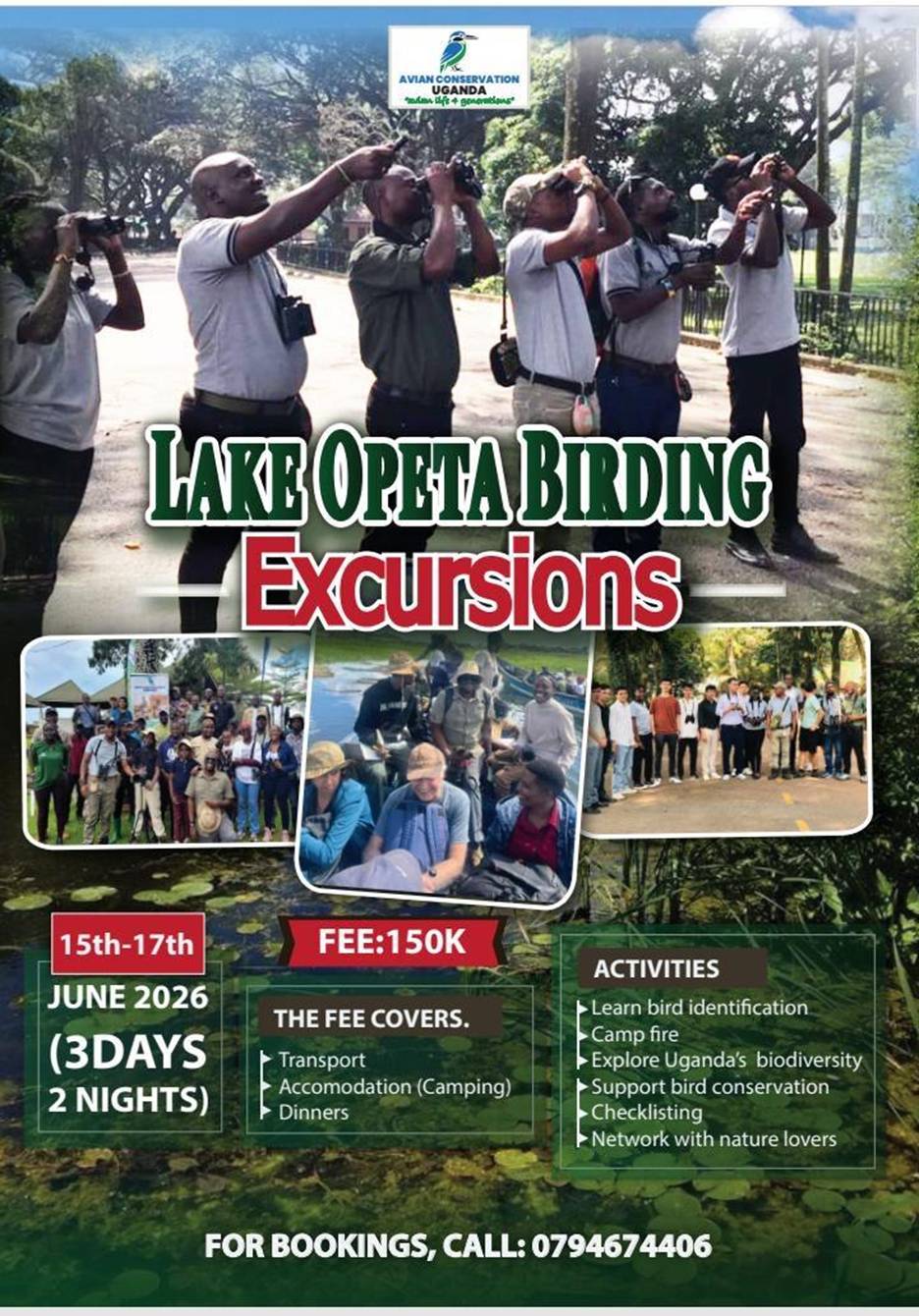
Uganda’s wetlands remain some of the most important bird habitats in Africa, sheltering rare and globally threatened species that depend on healthy ecosystems for survival. Among these treasured landscapes is the magnificent Lake Opeta and the greater Kyoga Basin, a haven for water birds, migratory species, and one of Uganda’s most iconic birds the majestic Shoebill.
As pressure on wetlands continues to rise through habitat destruction, pollution, and climate change, community-led conservation efforts are becoming more important than ever before. In response to this growing need, Avian Conservation Uganda is organizing an upcoming bird watching and bird monitoring excursion at Lake Opeta, bringing together bird lovers, conservationists, students, researchers, photographers, and local communities for a shared mission of protecting Uganda’s birdlife.
Lake Opeta is one of the least explored but biologically rich wetland systems in Uganda. Located within the Kyoga Basin, the area supports large populations of wetland birds and serves as a refuge for endangered and migratory species. The wetlands are particularly important breeding and feeding grounds for the Shoebill, a species that continues to attract birders and wildlife enthusiasts from across the world.
Beyond tourism value, the Shoebill is an important indicator species. Its survival reflects the health of Uganda’s wetlands. When wetlands are protected, entire ecosystems thrive supporting fish populations, water quality, climate regulation, and the livelihoods of surrounding communities.
This upcoming excursion will focus on bird monitoring activities, wetland observation, species identification, and conservation awareness. Participants will have an opportunity to explore one of Uganda’s remarkable birding destinations while contributing directly to conservation data collection and public awareness efforts.
Community involvement remains at the heart of successful conservation. For generations, local communities around wetlands have coexisted with nature, relying on these ecosystems for water, fishing, and grazing. By involving communities in bird monitoring and conservation excursions, organizations help build long-term stewardship and strengthen local appreciation for wildlife protection.
These excursions also inspire the next generation of conservation leaders. Young birders, students, and nature enthusiasts gain practical field experience while learning the importance of protecting habitats before they disappear. Every participant becomes an ambassador for conservation within their own community.
Bird watching is more than recreation; it is a powerful conservation tool. Each observation contributes to understanding species distribution, migration patterns, breeding behavior, and habitat changes. Monitoring activities help conservation organizations identify threats early and advocate for stronger wetland protection policies.
The Kyoga Basin continues to face environmental challenges that threaten sensitive species like the Shoebill. Wetland encroachment, illegal activities, and unsustainable resource use are slowly reducing suitable habitats. Conservation efforts therefore require collaboration between organizations, communities, government agencies, and passionate individuals willing to stand for nature.
Written by Godfrey, a passionate bird guide and conservation advocate who has guided birding experiences across Eastern Africa for several years. Through his field experience and conservation work, he continues to promote community participation in bird conservation and environmental awareness. Godfrey Elasmus T, also serves as the Chairman Board of Avian Conservation Uganda, where he works alongside fellow conservationists to advance bird protection initiatives, youth engagement, wetland conservation, and public awareness across Uganda.
Through this excursion, Avian Conservation Uganda-ACU hopes to strengthen public participation in bird conservation while showcasing the beauty and ecological importance of Lake Opeta.
Bird lovers across Uganda and the whole world at large are warmly invited to be part of this memorable conservation journey to witness the beauty of Uganda’s wetlands, contribute to bird monitoring efforts, and stand together for the protection of endangered species and their habitats.