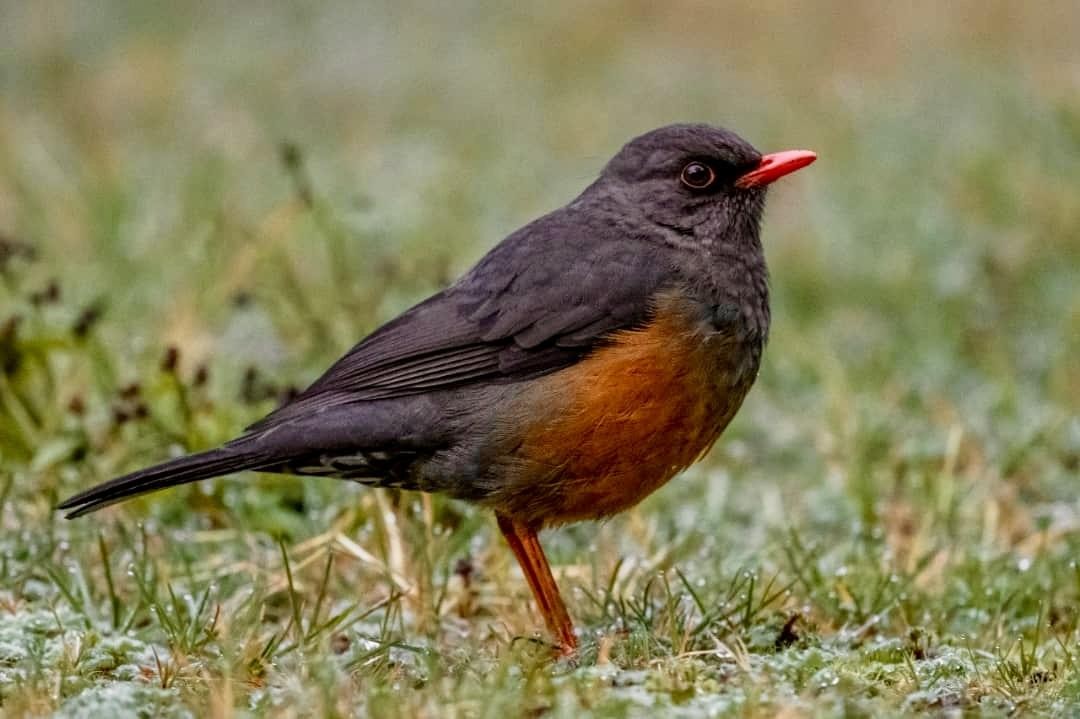
Abyssinian Ground Thrush

Conservation Status:

The Abyssinian Ground Thrush is currently classified as Least Concern on the IUCN Red List because of its relatively wide distribution and the absence of significant global population declines. This group of birds are renowned for their melodious songs and important ecological role in forest ecosystems.

Population Trends:

The global population trend is considered stable, although local populations may be affected by forest degradation and habitat loss outside protected areas.

Population Size:

There is no precise global population estimate available. However, the species is regarded as fairly common in suitable montane forest habitats across its range.

Family:

Turdidae family

Location:

In Uganda

Habitat:

In Uganda, the Abyssinian Ground Thrush is primarily found in the country’s montane forests, especially within the Albertine Rift. Key locations include: ● Bwindi Impenetrable National Park ● Rwenzori Mountains National Park ● Mgahinga Gorilla National Park ● Echuya Central Forest Reserve It inhabits montane and submontane forests, dense undergrowth, bamboo forests, and mature forest interiors, generally at elevations between 1,400 and 3,000 metres. The species feeds mainly on earthworms, insects, snails, spiders, berries, and other small forest-floor invertebrates

Migration Pattern:

The Abyssinian Ground Thrush is non-migratory (resident). It remains within its forest habitat throughout the year and does not undertake long-distance migrations.

Migration Distance:

It may make short altitudinal or local seasonal movements in response to food availability and weather conditions.
Abyssinian Ground Thrush

About this Bird:

The Secretive Songster of Uganda’s Forest Floor

The Abyssinian Ground Thrush is a shy and beautifully marked forest bird that spends much of its time foraging quietly on the forest floor. With its warm brown upperparts, pale underparts, and distinctive facial pattern, it is one of the characteristic thrushes of the Albertine Rift and East African montane forests. The species belongs to the Turdidae family, which includes thrushes and chats.

Conservation Importance

The Abyssinian Ground Thrush is an excellent indicator of healthy montane forest ecosystems. Its reliance on intact forest understory makes it particularly sensitive to habitat disturbance.

Protecting Uganda’s montane forests safeguards not only this beautiful thrush but also many other Albertine Rift endemic and near-endemic species. For birdwatchers exploring Bwindi, the Rwenzori Mountains, or Echuya Forest, encountering the Abyssinian Ground Thrush is a rewarding experience and a reminder of Uganda’s exceptional forest biodiversity.

Although it is often difficult to spot, its quiet presence on the forest floor reflects the richness and ecological integrity of Uganda’s remaining montane forests.

More Birds