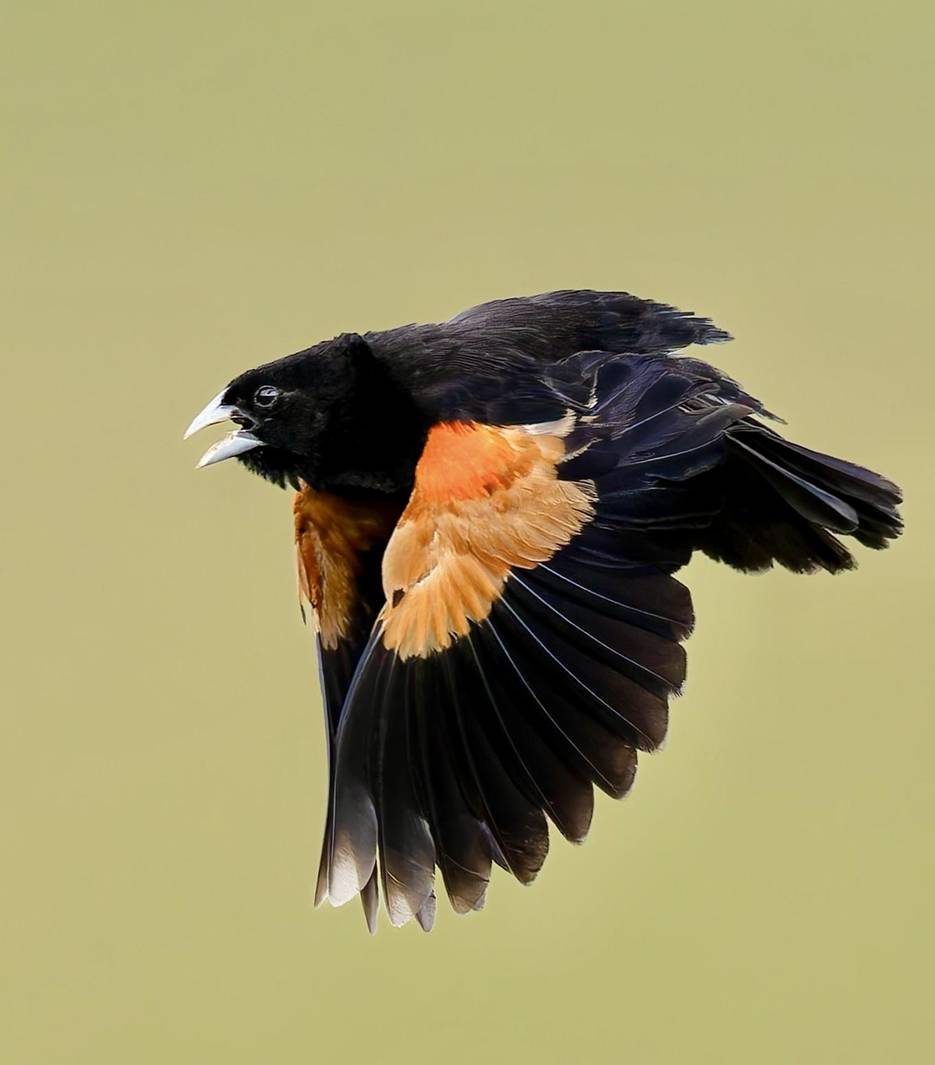
Fan-tailed Widowbird

Conservation Status:

The Fan-tailed Widowbird is classified as Least Concern on the IUCN Red List due to its wide distribution and healthy population across eastern and southern Africa.

Population Trends:

The global population trend is considered stable. The species remains common in suitable grassland habitats throughout its range.

Population Size:

There is no precise global population estimate available, but the species is regarded as common and widespread in areas with suitable habitat.

Family:

The Fan-tailed Widowbird belongs to the Ploceidae family, a group known for colorful plumage, elaborate courtship displays, and remarkable nesting behavior.

Location:

In Uganda

Habitat:

The Fan-tailed Widowbird is commonly found in: ● Natural grasslands ● Wet grasslands ● Savanna habitats ● Agricultural fields ● Marsh edges ● Floodplains and open country It is particularly associated with areas containing tall grasses where males perform their display flights and females can nest safely. The species feeds mainly on grass seeds, grains, and insects, especially during the breeding season when protein-rich insects are important for raising chicks.

Migration Pattern:

The Fan-tailed Widowbird is largely non-migratory (resident).

Migration Distance:

It does not undertake long-distance migrations but may make short seasonal movements in response to rainfall, grass growth, and food availability.
Fan-tailed Widowbird

About this Bird:

The Spectacular Dancer of Uganda’s Grasslands.

The Fan-tailed Widowbird (Euplectes axillaris) is one of Africa’s most elegant grassland birds. During the breeding season, the male transforms into a striking black bird adorned with a long, fan-shaped tail that is displayed in spectacular aerial courtship flights. It belongs to the Ploceidae family, which includes weavers and widowbirds.

Conservation Importance

The Fan-tailed Widowbird is an important indicator of healthy grassland ecosystems. Its presence reflects the availability of native grasses and suitable breeding habitats.

For birdwatchers, the breeding male is one of Uganda’s most impressive grassland birds, with its graceful display flights and dramatic tail feathers. Conserving Uganda’s grasslands and wetlands helps ensure the continued survival of this remarkable species and many other birds that depend on open-country habitats.

The Fan-tailed Widowbird is a reminder that some of nature’s most spectacular displays take place not in forests or mountains, but among the waving grasses of Uganda’s savannas.

More Birds