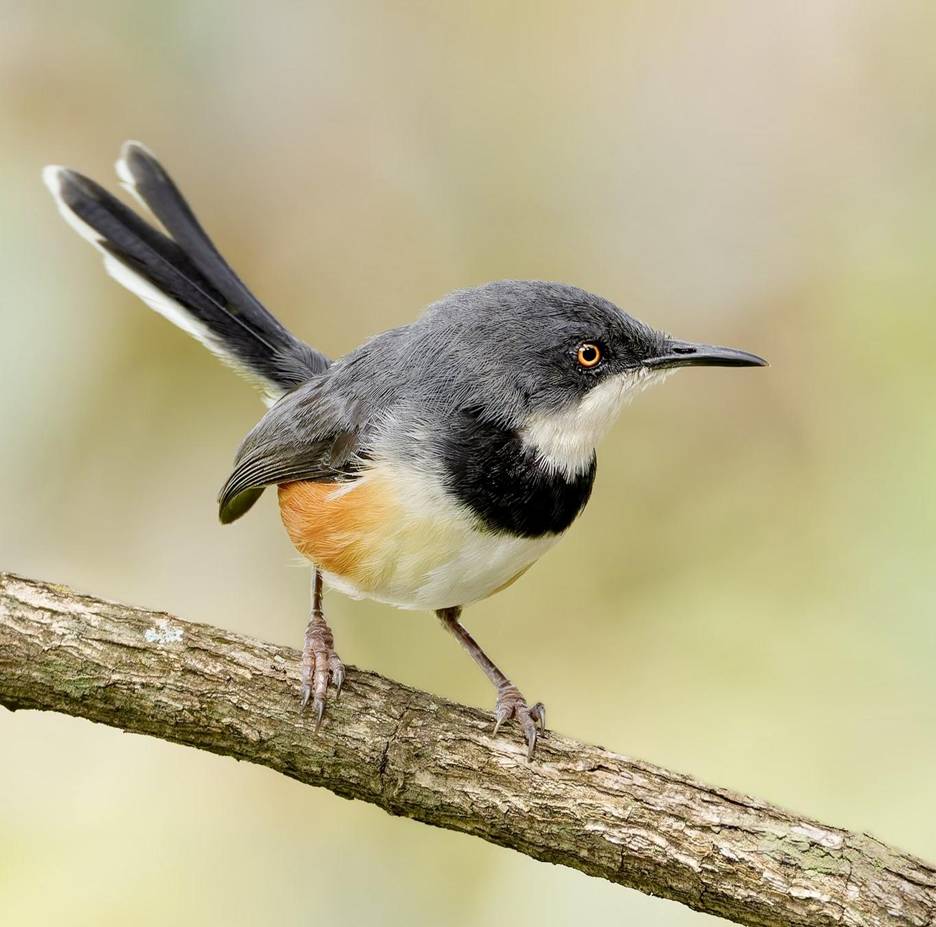
Black-collared Apalis

Conservation Status:

The Black-collared Apalis is currently classified as Least Concern on the IUCN Red List. Although it has a relatively restricted distribution in parts of East and Central Africa, its population is considered secure.

Population Trends:

The species is believed to have a stable population trend, particularly within protected forest habitats where suitable vegetation remains intact.

Population Size:

No accurate global population estimate is currently available. However, the species is regarded as fairly common within suitable forest habitats throughout its range.

Family:

The Black-collared Apalis belongs to the Cisticolidae family, a diverse group of small insectivorous birds found throughout Africa.

Location:

In Uganda

Habitat:

The Black-collared Apalis is primarily associated with the Albertine Rift region, including forests such as Bwindi Impenetrable National Park, the Rwenzori Mountains, and other montane and submontane forests of western Uganda. Its preferred habitats include: ● Montane forests ● Forest edges ● Secondary forest growth ● Dense woodland vegetation ● Bamboo zones and forest clearings The species feeds mainly on small insects, caterpillars, spiders, and other invertebrates gleaned from leaves and branches.

Migration Pattern:

The Black-collared Apalis is non-migratory (resident).

Migration Distance:

It remains within its forest habitat throughout the year and does not undertake long-distance migrations. Any movements are usually limited to local altitudinal shifts or short-distance dispersal in search of food.
Black-collared Apalis

About this Bird:

A Tiny Treasure of Uganda’s Forests

The Black-collared Apalis (Oreolais pulcher) is a small, active, and attractive forest bird known for its distinctive black collar, bright underparts, and restless movements through the forest canopy. This charming species belongs to the Cisticolidae family, a group that includes apalises, cisticolas, and other small insect-eating birds.

Conservation Importance

As a forest-dependent species, the Black-collared Apalis serves as an indicator of healthy montane forest ecosystems. Protecting Uganda’s Albertine Rift forests is essential for the conservation of this species and many other endemic and near-endemic birds that make the region one of Africa’s most important biodiversity hotspots. Though small and often overlooked, the Black-collared Apalis contributes significantly to insect control and the ecological balance of Uganda’s forests. For birdwatchers exploring the Albertine Rift, spotting this energetic little bird is always a rewarding experience.

More Birds