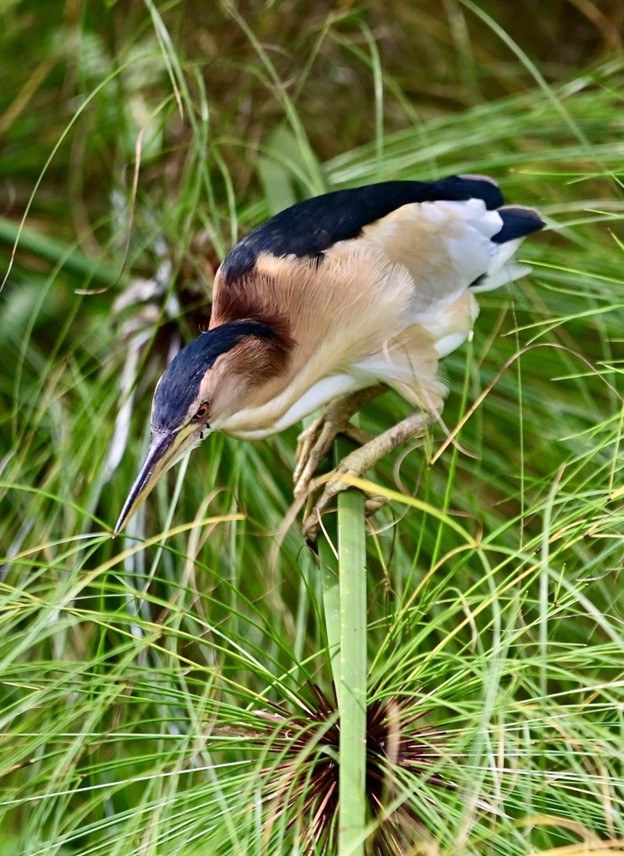
Little Bittern

Conservation Status:

The species is currently listed as Least Concern, with a large and generally stable global population.

Population Trends:

Globally, the trend is considered stable, though local declines can occur where wetlands are degraded or lost. Because it depends heavily on intact reedbeds, it is sensitive to environmental changes.

Population Size:

Exact numbers are not well known, but it remains widespread across its range.

Family:

Ardeidae

Location:

In Uganda, the Little Bittern is found in papyrus swamps, marshes, lake edges, and slow-moving wetlands

Habitat:

Mabamba Swamp, Lake Victoria shores, and other freshwater systems. It prefers dense vegetation where it can hunt quietly for fish, frogs, and insects.

Migration Pattern:

The Little Bittern shows partial migration. Some populations in Africa are resident, while others arrive from Europe and parts of Asia during the non-breeding season.

Migration Distance:

Migratory individuals can travel thousands of kilometers, crossing continents, while resident birds make only short local movements within wetland systems.
Little Bittern
Little Bittern

About this Bird:

The Hidden Reedbed Specialist

The Little Bittern (Ixobrychus minutus) is one of the most secretive birds of Africa’s wetlands, small, slender, and perfectly adapted to disappear among reeds. Belonging to the Ardeidae family (herons and bitterns), it is often heard or glimpsed briefly rather than seen clearly.

A Quiet Indicator of Healthy Wetlands

Though easily overlooked, the Little Bittern is a strong indicator of wetland health. Where reeds stand tall and waters remain undisturbed, this shy bird continues its quiet life, reminding us of the importance of protecting even the most hidden corners of nature.

More Birds