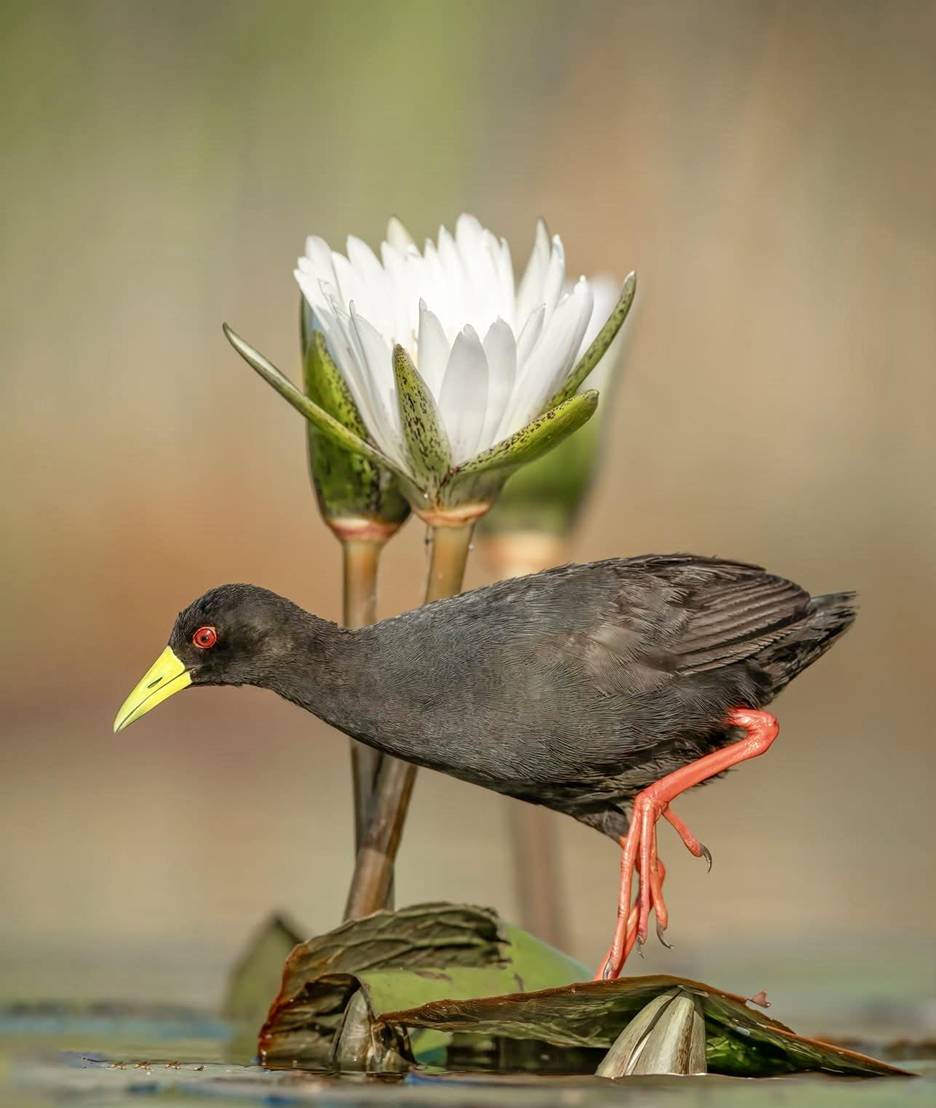
Black Crake

Conservation Status:

The Black Crake is currently classified as Least Concern on the IUCN Red List due to its wide distribution across sub-Saharan Africa and healthy population levels.

Population Trends:

The global population trend is considered stable. The species remains common throughout much of its range and continues to occupy a variety of wetland habitats.

Population Size:

Although an exact global population estimate is unavailable, the Black Crake is regarded as common and widespread in suitable wetland environments across Africa.

Family:

The Black Crake belongs to the Rallidae family, a group of birds specially adapted to marshes, swamps, and aquatic habitats.

Location:

In Uganda

Habitat:

The Black Crake is one of the most widespread wetland birds and can be found in papyrus swamps, marshes, lakeshores, riverbanks, ponds, flooded grasslands, and wetlands throughout the country. It is especially common around the shores of Lake Victoria, Lake Kyoga, Lake Mburo, and numerous smaller wetlands. The species feeds on insects, worms, snails, small fish, tadpoles, and aquatic invertebrates.

Migration Pattern:

The Black Crake is non-migratory (resident) and remains in Uganda throughout the year.

Migration Distance:

It does not undertake long-distance migrations but may make short local movements between wetlands in response to seasonal water levels, rainfall, and food availability.
Black Crake
Black Crake

About this Bird:

The Bold Resident of Uganda’s Wetlands

The Black Crake (Zapornia flavirostra) is a small but conspicuous wetland bird, easily recognized by its dark plumage, bright yellow bill, and vivid red legs. Unlike many rails that remain hidden in dense vegetation, the Black Crake is often seen walking confidently along the edges of wetlands and floating vegetation. It belongs to the Rallidae family, which includes rails, crakes, and coots.

Conservation Importance

The Black Crake is an important indicator of healthy freshwater ecosystems. Its presence often reflects good wetland conditions and abundant aquatic life. Protecting Uganda’s wetlands not only benefits the Black Crake but also supports countless other bird species, fish, and wildlife that depend on these vital habitats. With its bold behavior and striking appearance, the Black Crake is one of the most familiar and charming wetland birds in Uganda, bringing life and movement to marshes and lakeshores across the country.

More Birds