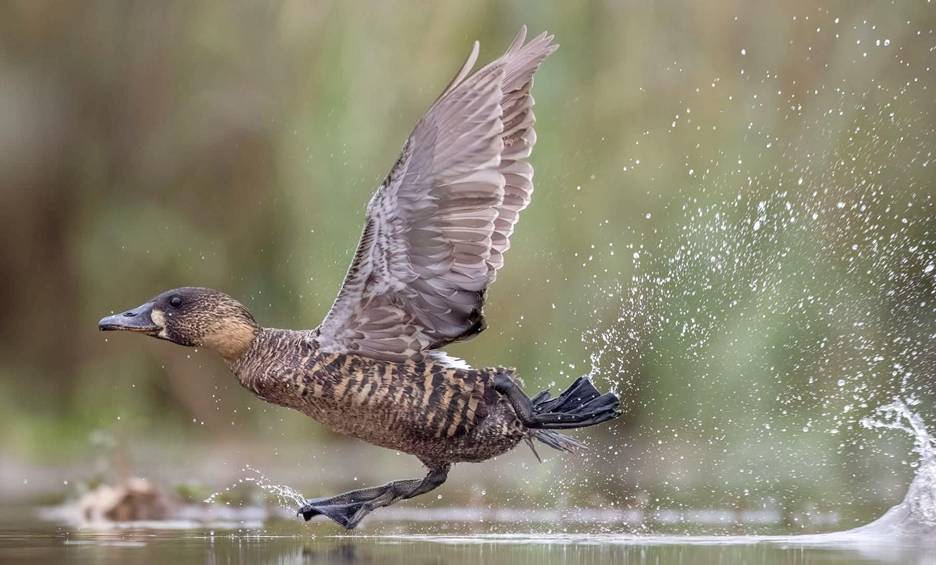
White-backed Duck

Conservation Status:

The White-backed Duck is currently classified as Least Concern on the IUCN Red List due to its broad distribution across sub-Saharan Africa and Madagascar.

Population Trends:

The global population trend is considered stable, although local populations may be affected by wetland degradation, drainage, and disturbance.

Population Size:

The global population is estimated to number tens of thousands of individuals, and the species remains locally common in suitable wetland habitats.

Family:

The White-backed Duck belongs to the Anatidae family, a diverse group of waterbirds adapted to aquatic environments.

Location:

In Uganda

Habitat:

The White-backed Duck occurs in papyrus swamps, marshes, sheltered lakeshores, slow-moving rivers, lagoons, and freshwater wetlands. It is particularly associated with wetlands containing dense aquatic vegetation where it can feed and hide from predators. The species feeds mainly on aquatic plants, seeds, roots, insects, mollusks, and other small aquatic organisms.

Migration Pattern:

The White-backed Duck is non-migratory (resident) throughout most of its range.

Migration Distance:

It does not undertake long-distance migrations but may make local seasonal movements between wetlands in response to changes in water levels, rainfall patterns, and food availability.
White-backed Duck
White-backed Duck

About this Bird:

The Secretive Diver of Africa’s Wetlands

The White-backed Duck (Thalassornis leuconotus) is one of Africa’s most distinctive and specialized waterfowl. Unlike many ducks that feed at the water’s surface, the White-backed Duck is an excellent diver, spending much of its time underwater searching for food. It belongs to the Anatidae family, which includes ducks, geese, and swans.

Conservation Importance

The White-backed Duck is an important indicator of healthy freshwater wetlands. Because it depends on dense aquatic vegetation and undisturbed marsh habitats, its presence often reflects good wetland quality.

Protecting Uganda’s wetlands, including papyrus swamps and freshwater marshes, is essential for conserving this species and many other waterbirds that depend on these fragile ecosystems. Though often overlooked due to its secretive nature, the White-backed Duck remains one of Uganda’s most fascinating and specialized wetland birds.

More Birds