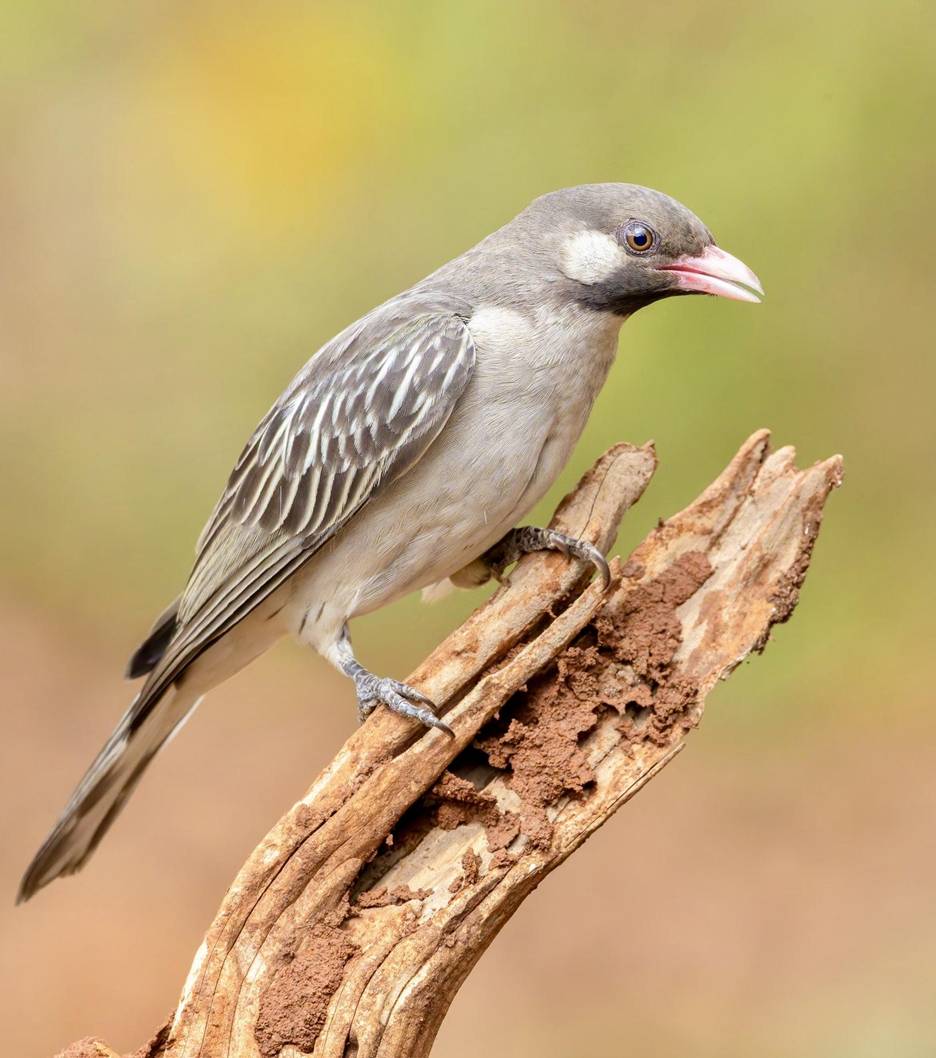
Greater Honeyguide

Conservation Status:

The Greater Honeyguide is currently classified as Least Concern on the IUCN Red List due to its extensive distribution across sub-Saharan Africa and relatively stable population.

Population Trends:

The global population trend is considered stable. The species remains widespread throughout much of its range and continues to occupy suitable woodland and savanna habitats.

Population Size:

There is no precise global population estimate available. However, the Greater Honeyguide is considered fairly common and widespread across many parts of Africa.

Family:

The Greater Honeyguide belongs to the Indicatoridae family, a unique group of birds known for their association with beeswax and brood-parasitic breeding behavior.

Location:

In Uganda

Habitat:

The Greater Honeyguide is found in a wide variety of habitats, including savannas, woodland, forest edges, riverine forests, acacia scrub, farmlands, and protected areas. It occurs throughout much of the country wherever suitable nesting sites and bee colonies are available. The species feeds on beeswax, bee larvae, insects, and other small invertebrates. It is one of the few birds capable of digesting beeswax.

Migration Pattern:

The Greater Honeyguide is non-migratory (resident) and remains within its range throughout the year.

Migration Distance:

It does not undertake long-distance migrations but may make short local movements in search of food resources and breeding opportunities.
Greater Honeyguide
Greater Honeyguide

About this Bird:

Nature’s Remarkable Honey Hunter

The Greater Honeyguide (Indicator indicator) is one of the most fascinating birds in the world. Famous for its unique ability to lead people and honey badgers to wild bee nests, this remarkable species has developed one of nature’s most extraordinary partnerships. It belongs to the Indicatoridae family, commonly known as the honeyguides.

Population and Breeding Strategy

Like many honeyguides, the Greater Honeyguide is a brood parasite, laying its eggs in the nests of other bird species. The host birds then incubate and raise the young honeyguide.

Conservation Importance

The Greater Honeyguide is one of Africa’s most culturally significant birds. In many communities, including parts of East Africa, it has a long history of cooperating with people by guiding them to bee nests. After the honey is harvested, the bird feeds on the remaining wax and larvae.

This extraordinary relationship between humans and wildlife is one of the finest examples of mutual cooperation in nature. Protecting Uganda’s woodlands and natural ecosystems ensures the continued survival of this unique bird and the ancient traditions associated with it. The Greater Honeyguide reminds us that nature’s most remarkable stories are often found in the relationships between species, making it one of Uganda’s most fascinating birds.

More Birds