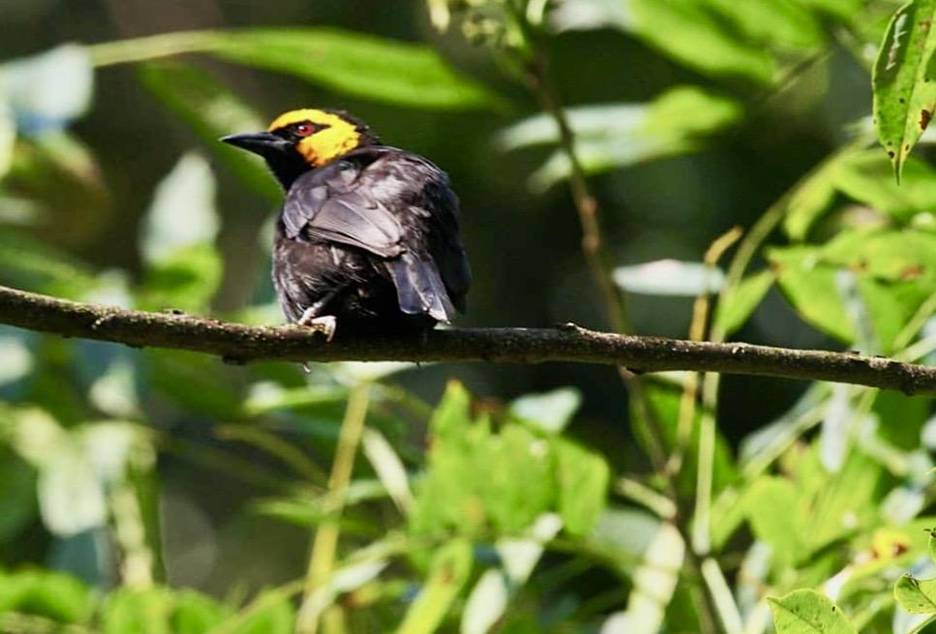
Black-bellied Weaver

Conservation Status:

The Black-bellied Weaver is listed as Least Concern, with a stable and widespread population across parts of central and eastern Africa.

Population Trends:

The species shows a stable trend, supported by its adaptability to wetland and woodland habitats.

Population Size:

Exact global population figures are not clearly quantified, but it remains fairly common in suitable habitats throughout its range.

Family:

Ploceidae

Location:

In Uganda

Habitat:

The Black-bellied Weaver is commonly found in wetlands, papyrus swamps, lakeshores, riverine vegetation, forest edges, and gardens near water. It feeds mainly on seeds, insects, and small fruits.

Migration Pattern:

The species is non-migratory (resident) and remains within its territory throughout the year.

Migration Distance:

It may make short local movements depending on breeding conditions, rainfall, and food availability.
Black-bellied Weaver

About this Bird:

The Golden Builder of the Wetlands

The Black-bellied Weaver (Ploceus melanogaster) is a striking and colorful bird, especially the breeding male with its bright yellow plumage and contrasting black belly. Known for its woven nests and active colony life, it belongs to the Ploceidae family.

A Skilled Architect of Nature

Colorful, social, and hardworking, the Black-bellied Weaver reflects the remarkable creativity found in Uganda’s birdlife. Its woven nests hanging above wetlands are reminders of the delicate relationship between birds and healthy water ecosystems.

More Birds