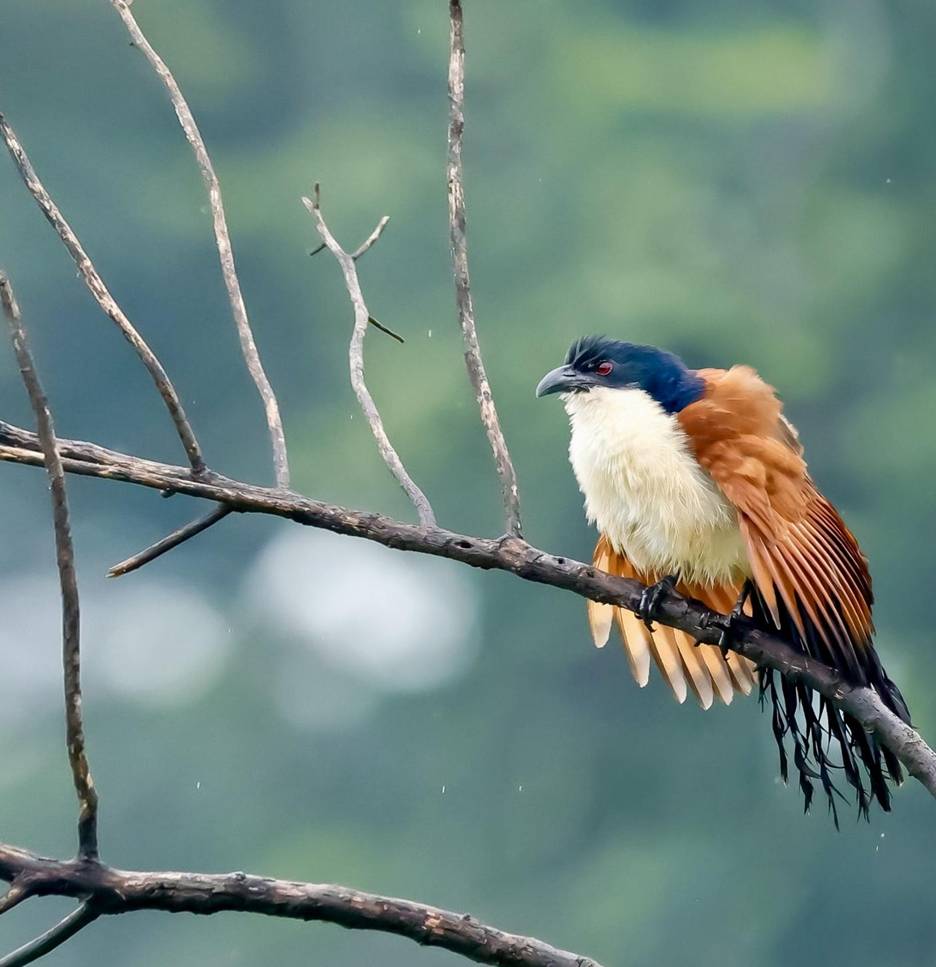

Black-headed Cuckoo

Conservation Status:

The Black-headed Cuckoo is listed as Least Concern, with a large and widespread population across sub-Saharan Africa.

Population Trends:

The species shows a stable population trend, supported by its broad distribution and adaptability to different wooded habitats.

Population Size:

Exact global population figures are not clearly quantified, but the species remains fairly common in suitable habitats.

Family:

Cuculidae

Location:

Uganda

Habitat:

The Black-headed Cuckoo is commonly found in woodlands, forest edges, savannas, riverine forests, gardens, and bushy habitats. It prefers areas with trees and dense vegetation where host bird species are present.

Migration Pattern:

The Black-headed Cuckoo is a partially migratory species, with seasonal movements linked to rainfall and breeding opportunities.

Migration Distance:

Some populations travel hundreds to over a thousand kilometers across sub-Saharan Africa depending on seasonal conditions.
Black-headed Cuckoo
Black-headed Cuckoo

About this Bird:

The Secretive Traveler of the Woodlands

The Black-headed Cuckoo (Chrysococcyx caprius) is a sleek and attractive bird known for its glossy plumage, striking dark head, and melodic whistling calls. Like many cuckoos, it belongs to the Cuculidae family and is famous for its brood-parasitic behavior, laying eggs in the nests of other bird species.

A Hidden Voice in the Trees

Often heard before it is seen, the Black-headed Cuckoo adds mystery and beauty to Uganda’s woodlands. Its seasonal movements remind us of the delicate natural rhythms that connect birds to changing landscapes and climates across Africa.

More Birds