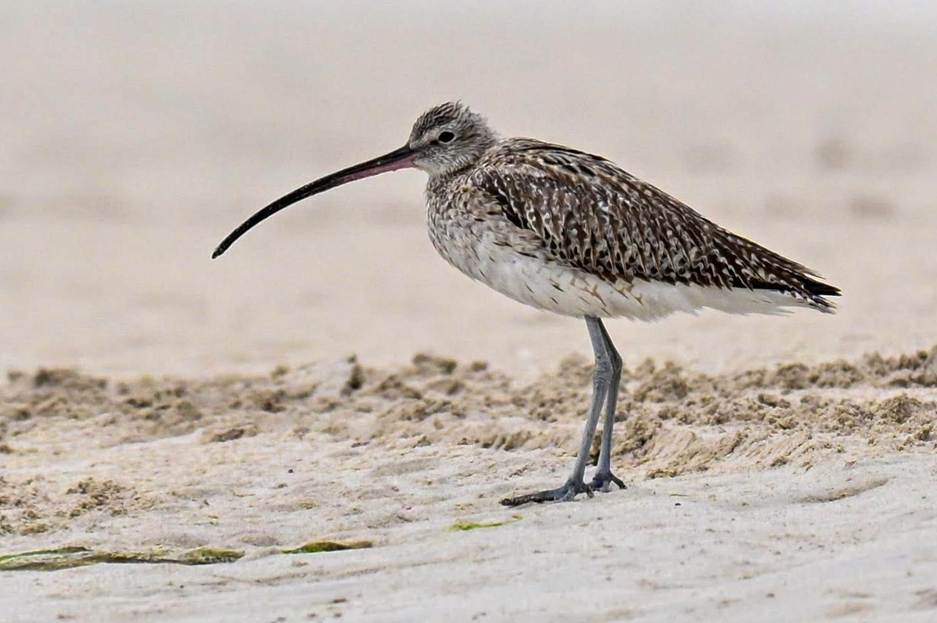
Eurasian Curlew

Conservation Status:

The Eurasian Curlew is currently listed as Near Threatened, with a global population estimated at hundreds of thousands of individuals.

Population Trends:

The species is experiencing a declining trend in many parts of its range due to habitat loss, wetland drainage, agricultural intensification, disturbance, and reduced breeding success.

Population Size:

European breeding numbers alone are estimated at 212,000-292,000 pairs.

Family:

Scolopacidae

Location:

In Uganda

Habitat:

The Eurasian Curlew is an uncommon seasonal migrant visitor, mainly found in lake shores, mudflats, marshes, wetlands, and river edges, especially around Lake Victoria, Lake Kyoga, and other major water bodies. It feeds on worms, insects, crabs, and other small invertebrates.

Migration Pattern:

The Eurasian Curlew is a long-distance migrant, breeding across Europe and Asia and wintering in Africa, southern Europe, and southern Asia.

Migration Distance:

Birds reaching East Africa may travel 4,000-8,000 km or more during migration.
Eurasian Curlew
Eurasian Curlew

About this Bird:

The Voice of Distant Wetlands!

The Eurasian Curlew (Numenius arquata) is one of the world’s most recognizable wading birds, famous for its long down-curved bill and haunting, bubbling call. A member of the Scolopacidae family, it is the largest curlew species and a remarkably long-distance migrant.

A Bird that Connects Continents

When a Eurasian Curlew appears in Uganda, it carries the story of distant moors, tundra, and coastlines. Its journey reminds us that protecting wetlands in Uganda helps safeguard life far beyond our borders.

More Birds