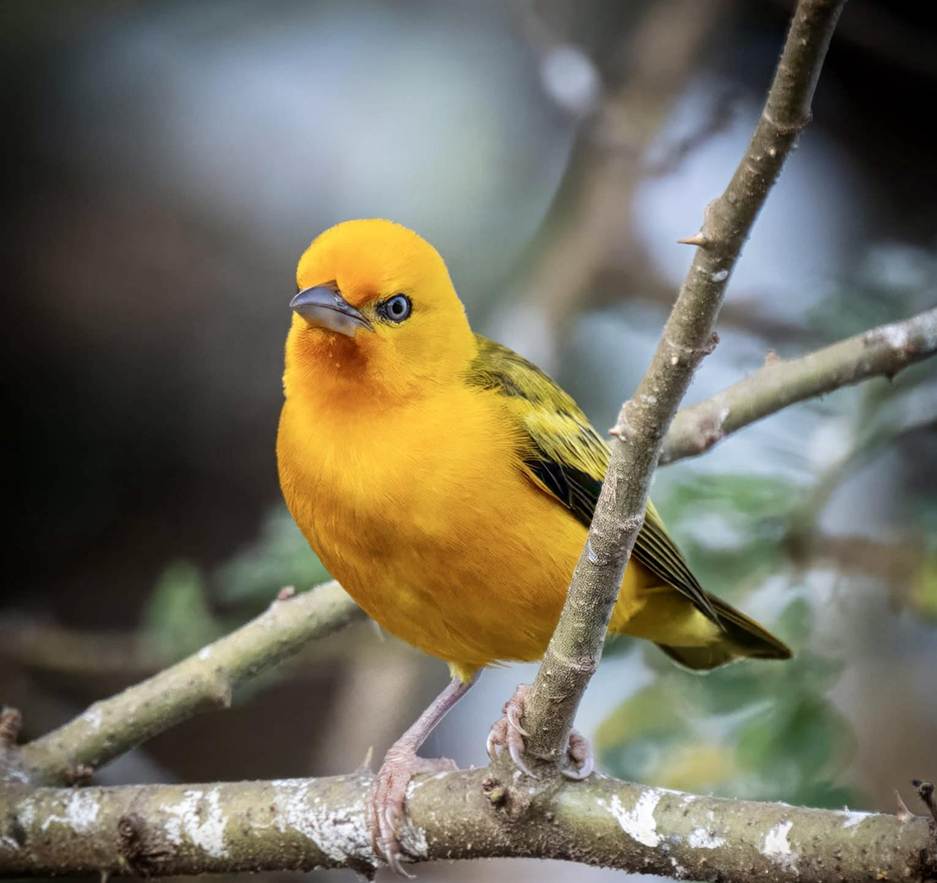
Orange Weaver

Conservation Status:

The Orange Weaver is currently listed as Least Concern, meaning it is not globally threatened at present. Its population is considered widespread enough across its range to remain secure.

Population Trends:

The overall population trend is believed to be stable, with no evidence of major widespread declines at present.

Population Size:

Exact global numbers are not precisely known, but the species remains locally common in suitable wetland habitats.

Family:

Ploceidae

Location:

In Uganda

Habitat:

The Orange Weaver occurs mainly in wetlands, reedbeds, papyrus swamps, lakeshores, and river-edge vegetation, especially around the Lake Victoria basin and other marshy areas. Uganda hosts the East African subspecies P. a. rex

Migration Pattern:

The Orange Weaver is non-migratory (resident).

Migration Distance:

It does not undertake long-distance migration, though it may make short local movements in response to water levels, breeding conditions, and food availability.
Orange Weaver
Orange Weaver

About this Bird:

 A Bright Flame of the Wetlands

The Orange Weaver (Ploceus aurantius) is one of Africa’s most striking wetland birds, especially the breeding male, which glows in brilliant orange and gold. A member of the Ploceidae family, it is famous for its woven nests suspended over water and its lively colony behavior.

A Jewel of the Marsh

Colorful, social, and full of energy, the Orange Weaver brings life to Uganda’s wetlands. Its presence is a reminder that healthy marshes are among the richest homes for birdlife.

More Birds