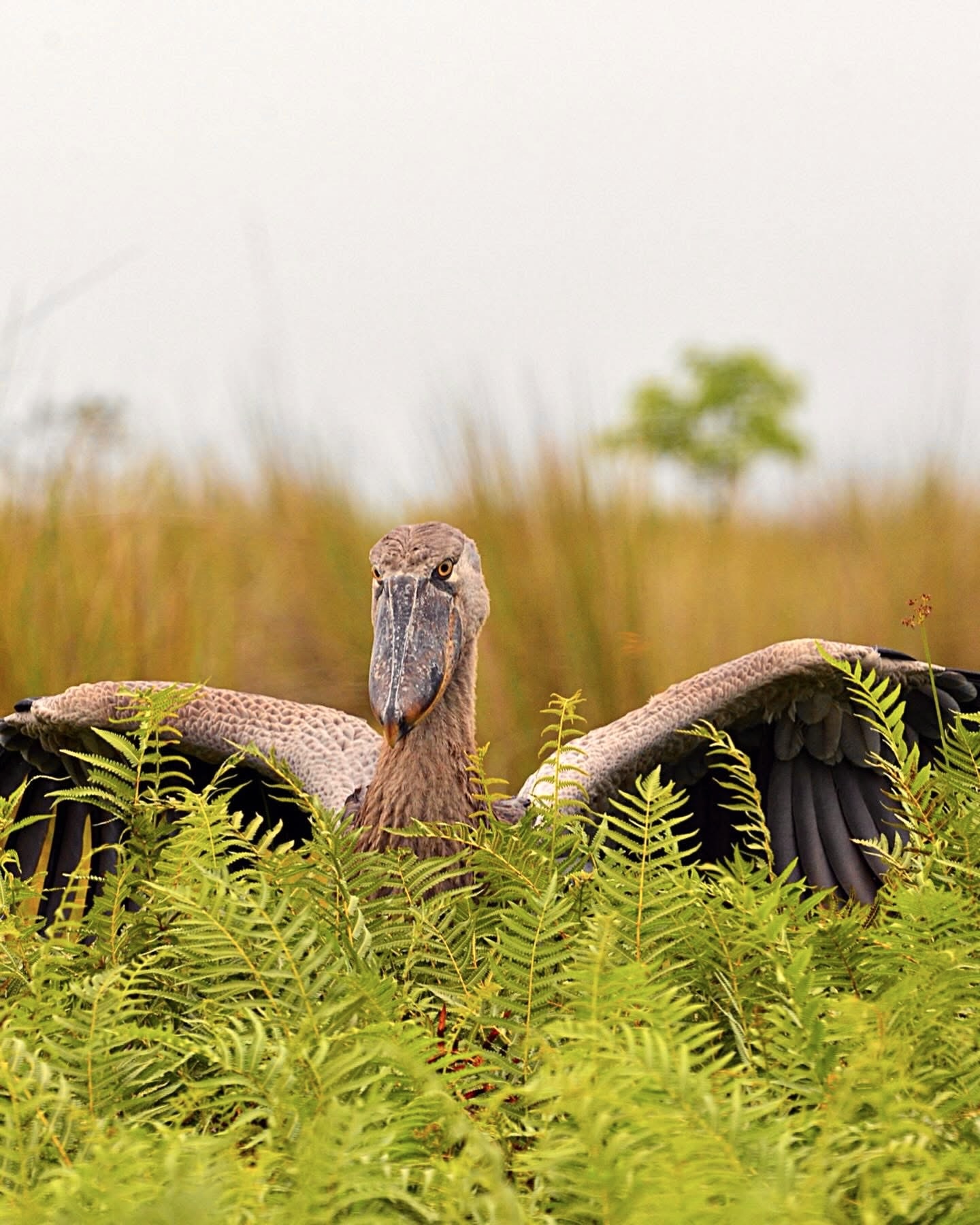
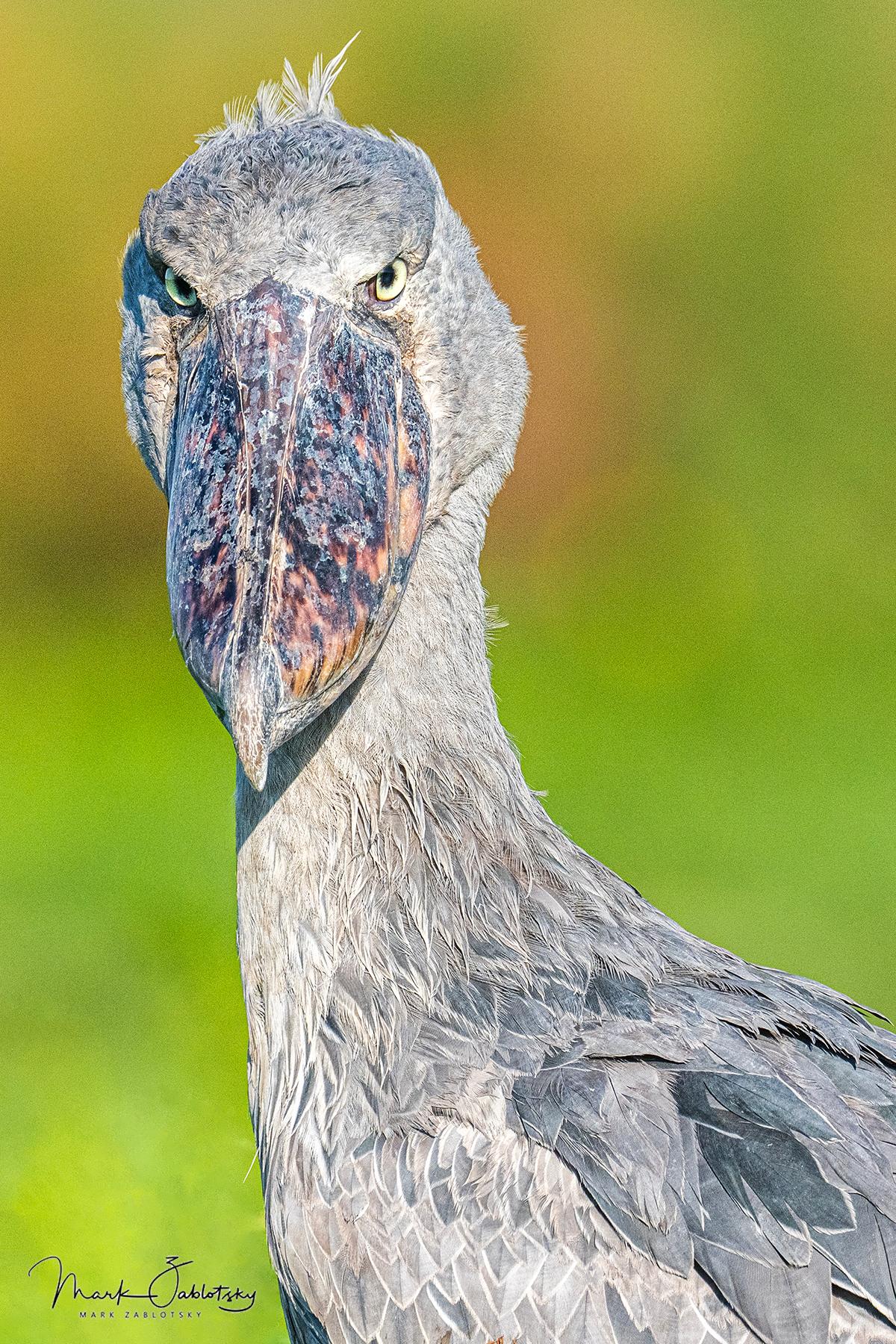
Shoebill Stork

Conservation Status:

The Shoebill is currently listed as Vulnerable on the IUCN Red List This status is a serious warning. While not yet endangered, the species faces a high risk of decline if conservation efforts are not strengthened.

Population Trends:

Trend: Declining steadily due to habitat loss and human disturbance- The slow breeding rate of Shoebills makes recovery difficult, meaning every loss carries weight for the future of the species.

Population Size:

● Global population: Approximately 5,000 – 8,000 individuals ● Mature individuals: Around 3,300-5,300

Family:

The Shoebill is unique in the bird world: ● Order: Pelecaniformes ● Family: Balaenicipitidae (the only living member) This singular classification reflects just how distinct and evolutionarily ancient the species is.

Location:

Shoebills are found in East and Central Africa, with the best chances being in Uganda’s Mabamba Wetland (Lake Victoria), Murchison Falls National Park, Ziwa Rhino Sanctuary, Lake Mburo Wetlands, and Makanaga Wetlands. Uganda remains one of the best and most reliable destinations in the world to observe this species in the wild.

Habitat:

The Shoebill is a specialist of wetland ecosystems, Freshwater swamps, Papyrus and reed beds, Floodplains with slow-moving water, These habitats are rich in lungfish, their primary prey, and must remain undisturbed for breeding success.

Migration Pattern:

Unlike many bird species, the Shoebill is largely non-migratory (sedentary) It does not undertake long-distance migrations. Movement is usually local and seasonal, following water levels and food availability. Typical movement distances are short-range within wetland systems, rather than continental migrations. This makes habitat protection even more critical; if a wetland is lost, the birds rarely relocate far.

Migration Distance:

Avian Conservation Uganda Shoebill Stork
avian conservation uganda (17)

About this Bird:

The Shoebill (Balaeniceps rex) is one of Africa’s most iconic and mysterious birds, often described as prehistoric in appearance and deeply tied to the health of our wetlands. For any birder or conservationist in Uganda, encountering this species is not just a sighting, but a moment of connection with one of nature’s rarest survivors.

Conservation Challenges

The Shoebill faces several ongoing threats:

  • Wetland drainage for agriculture

  • Human disturbance (fishing, tourism pressure)

  • Illegal wildlife trade (especially chicks)

  • Climate change is affecting water systems

For avian conservation in Uganda, the Shoebill is more than a bird; it is a flagship species for wetland conservation. Sites like Mabamba Wetland stand today not only as birding hotspots but as living proof that community-led conservation and responsible tourism can protect even the most fragile species.

At Avian Conservation Uganda, the Shoebill reminds us of a simple truth: when wetlands thrive, life thrives. Protecting this remarkable bird is not just about saving a species; it is about preserving an entire ecosystem for generations to come.

More Birds