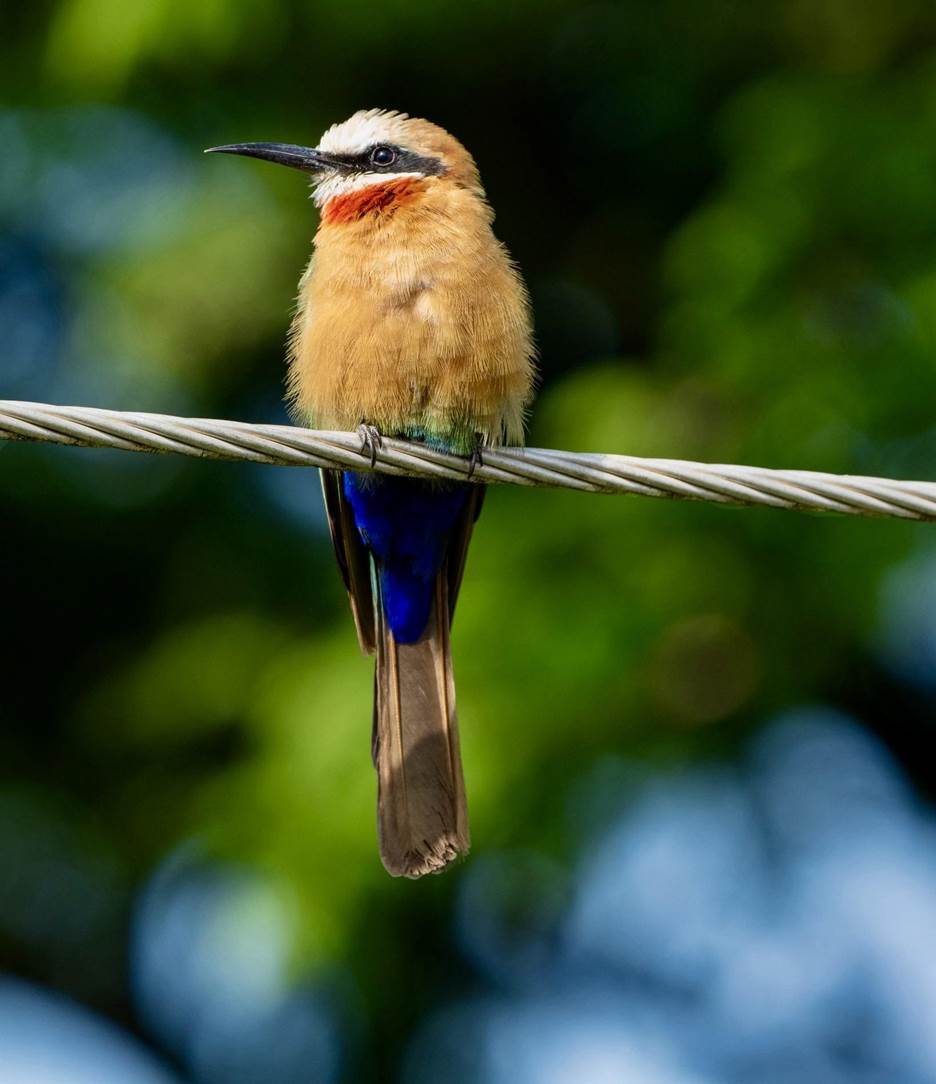
White-fronted Bee-eater

Conservation Status:

The White-fronted Bee-eater is listed as Least Concern, with a large and stable population across much of sub-Saharan Africa.

Population Trends:

The species shows a stable population trend, supported by its wide range and successful colonial breeding behavior.

Population Size:

Exact global numbers are not precisely known, but it remains common in suitable habitats throughout its range.

Family:

Meropidae

Location:

In Uganda

Habitat:

The White-fronted Bee-eater is commonly found in savannas, riverbanks, open woodlands, wetlands edges, and grasslands, especially where there are sandy banks for nesting colonies. It feeds mainly on flying insects such as bees, wasps, and dragonflies.

Migration Pattern:

The species is largely non-migratory (resident),

Migration Distance:

Some populations may make short seasonal movements, usually within a few hundred kilometers, following rainfall and insect availability.
White-fronted Bee-eater

About this Bird:

The Social Jewel of the Riverbanks!

The White-fronted Bee-eater (Merops bullockoides) is one of Africa’s most colorful and social birds, admired for its green plumage, white forehead, and graceful aerial hunting. It belongs to the Meropidae family and is famous for living in lively colonies along riverbanks and sandy ground.

A Bird that Thrives Together

Highly social and constantly active, the White-fronted Bee-eater reminds us of the strength found in community. Its colorful colonies bring life to Uganda’s riverbanks and highlight the importance of protecting healthy open landscapes and wetlands.

More Birds