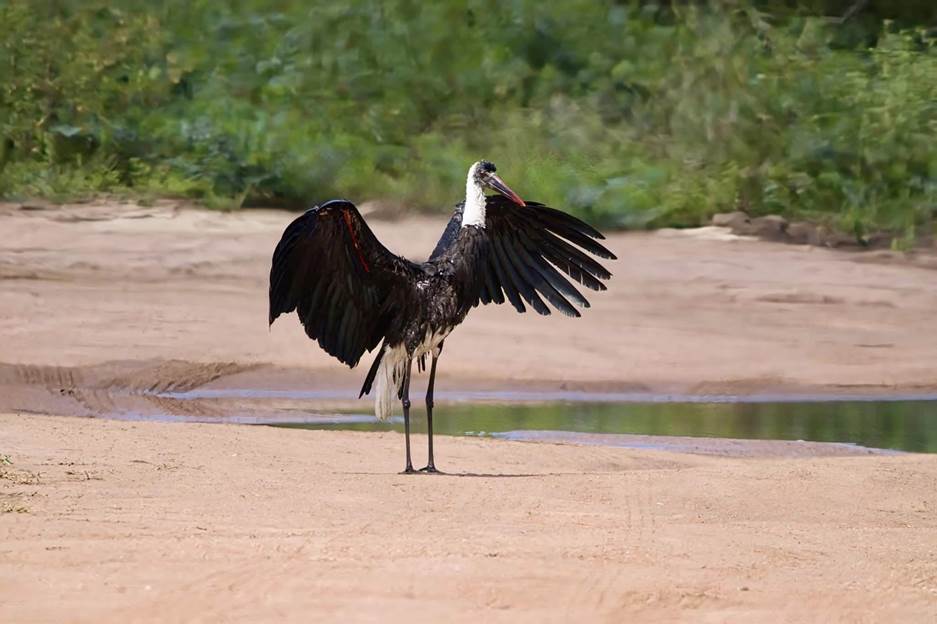
Woolly-necked Stork

Conservation Status:

It is currently listed as Near Threatened, with a moderate global population

Population Trends:

The species is declining in many parts of its range, mainly due to habitat loss, wetland degradation, and human disturbance.

Population Size:

Exact numbers are not clearly known.

Family:

Ciconiidae

Location:

In Uganda

Habitat:

It is found in wetlands, grasslands, farmlands, and near water bodies, often feeding in shallow water or open fields across the country.

Migration Pattern:

The Woolly-necked Stork is largely non-migratory, though it makes local and seasonal movements

Migration Distance:

Typically within tens to a few hundred kilometers, following rainfall and food availability.
Woolly-necked Stork
Woolly-necked Stork

About this Bird:

A Graceful Guardian of Wetlands and Fields!

The Woolly-necked Stork (Ciconia episcopus) is a striking bird, easily recognized by its dark body and distinctive white, woolly neck. Calm and purposeful, it moves between wetlands and open fields, playing an important role in maintaining ecological balance. It belongs to the Ciconiidae family.

A Bird Between Water and Land

Elegant and adaptable, the Woolly-necked Stork reflects the delicate link between wetlands and farmlands, its  future is tied closely to how well these landscapes are protected.

More Birds